
This document provides a step-by-step guide for choosing the right plant for the right place in Eastern Washington.
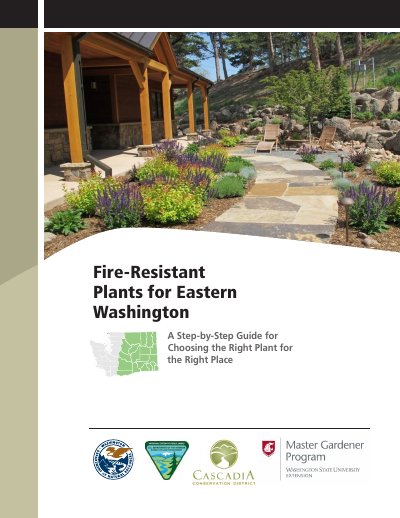
Fire-Resistant Plants for Eastern Washington is a Washington State University Master Gardener publication that helps building owners, homeowners, businesses, and landscapers choose fire-resistant plants for the right place. It stresses that no vegetation is absolutely fire-proof and that plant selection, placement, and maintenance together reduce wildland fire risk around homes in the Wildland Urban Interface.
The guide covers fire occurrence and fire resistance in Eastern Washington, home ignition zones and landscape zones, maintenance, notes on trees and plants, invasive plants and noxious weeds, and web resources. It gives example species in seven categories: groundcovers, herbaceous perennials, vines, deciduous shrubs, broadleaf evergreen shrubs, non-turf grasses, and trees.
No. Even fire-resistant plants will burn if they are not well maintained.
Historically, wildland fire would burn an area every 6 to 30 years.
The plants are divided into seven categories, including groundcovers, perennials, vines, shrubs, grasses, and trees.