
This paper describes the characteristics of non-cooling green cutting technology, and describes several typical processing methods. At the same time, it summarizes and summarizes the development status of several processing methods and their practical applications in factory design.
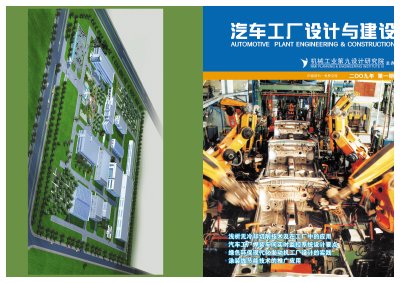
This is a Chinese technical journal article, "浅析无冷却切削技术及在工厂中的应用" (a brief analysis of non-cooling cutting technology and its application in factories) by Ye Xin, printed in the 2009 No. 1 issue (total issue 50, published June 2009) of the semiannual journal Automobile Factory Design and Construction (汽车工厂设计与建设), hosted by 机械工业第九设计研究院. The issue's contents page also lists related articles on machining efficiency, body-shop monitoring, conveyors, Logix5000 subprogram blocks, PLC use in shaft furnaces, compressed-air systems, diesel generator sets and paint-line energy saving.
The article defines non-cooling (dry) cutting as machining a product without cutting fluid while still meeting quality, efficiency and cost requirements, and argues the case with coolant costs of 14–17% of part machining cost and about one tenth of a factory's energy use. It explains the Salomon cutting-speed/temperature curve as the basis of dry cutting, describes hard turning with PCBN tools (hardness, heat resistance, thermal conductivity, friction coefficient, insert geometry), and lists the machine requirements: high-speed motor spindles from 10,000 to 150,000 r/min at 0.5 to 80 kW, fast feed systems reaching 60–80 m/min, rigid machine beds and limited tool overhang. A table compares carbide, cermet, ceramic, CBN and polycrystalline diamond tool materials for dry cutting. This manual is written in Chinese.
| PCBN compact hardness | 3000–5000 HV |
|---|---|
| PCBN heat resistance | 1400–1500 °C |
| PCBN thermal conductivity | 1300 W/(m·°C) |
| CBN friction coefficient | 0.1–0.3 |
| High-speed spindle speed range | 10,000–150,000 r/min |
| High-speed spindle power range | 0.5–80 kW |
| Fast feed system feed speed | 60–80 m/min |
| Fast feed system acceleration | 19.6–98 m/s² |
| Maximum tool overhang | Not more than 1.5 times the shank height |
It is a machining method that does not use cutting fluid while still meeting requirements for machining quality, efficiency and cost, minimizing environmental impact and maximizing resource use.
It follows the Salomon cutting speed and temperature curve: cutting at high speed lowers cutting temperature and cutting force, allowing efficient machining without coolant.
CBN is described as the most commonly used tool material for dry machining of hardened steel and cast iron.
Built-in high-speed motor spindles are available from 10,000 r/min to 150,000 r/min, with power from 0.5 kW to 80 kW.