
HYPOXITRAK is a fluorescent DNA dye used in scientific research and development. It is a blue, pale liquid with no odor.
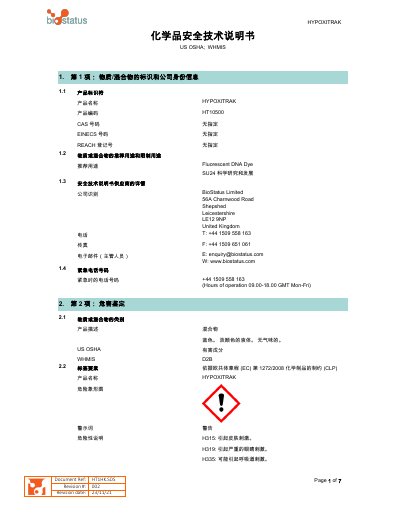
BioStatus HYPOXITRAK (product code HT10500) is a fluorescent DNA dye (SU24) intended for scientific research and development. It is supplied as a blue, odorless, light-colored liquid mixture by BioStatus Limited in Shepshed, United Kingdom.
This Safety Data Sheet (Revision 002, dated 23/11/21) identifies hazards such as skin and eye irritation and possible respiratory irritation. It provides first-aid, fire-fighting, spill-response, handling, storage, exposure-control, and disposal information. This manual is written in Chinese.
| Product name | HYPOXITRAK |
|---|---|
| Product code | HT10500 |
| Recommended use | Fluorescent DNA Dye SU24 for scientific research and development |
| Storage temperature | 2-8 °C |
| Hazard statements | H315, H319, H335 |
It is a fluorescent DNA dye (SU24) for scientific research and development.
Store at 2-8 °C and do not freeze.
Rinse cautiously with water for several minutes, remove contact lenses if possible, and continue rinsing.
No, it is not classified as a dangerous good for transport under UN recommendations.