
This is a manual on food safety traceability system, which is suitable for small and medium-sized food production enterprises. It mainly introduces how food production enterprises can establish a traceability system in the production process to ensure food safety
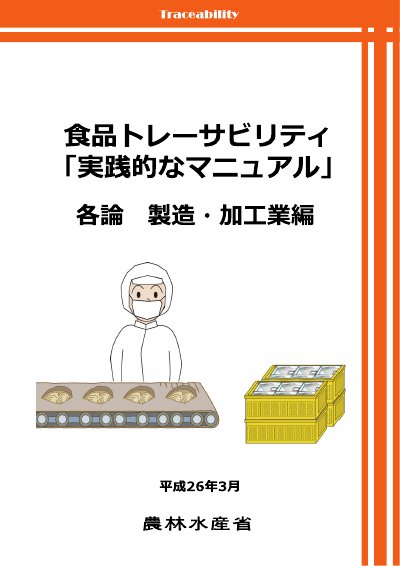
This document is the Manufacturing and Processing Industry Edition of MAFF's “Practical Manual” series on food traceability. It explains how food manufacturers and processors can start traceability work, review existing efforts, and improve step by step, helping small and medium-sized businesses implement the basic items in the Guidelines for Introduction of Food Traceability Systems.
It is intended for people responsible for designing traceability work procedures and creating and managing record forms, as well as for managers who make decisions about traceability. The manual is not a task-level work manual; it says businesses should create their own work manuals as needed. Its content is organized around three steps: identifying suppliers and customers, identifying food, and linking identified food, plus record storage. This manual is written in Japanese.
It is intended mainly for small and medium-sized businesses, especially the people responsible for designing traceability procedures and creating and managing record forms, as well as managers who make decisions about traceability.
Step 1 is identifying suppliers and customers.
It covers food manufacturing and the beverage, tobacco and feed manufacturing category, with listed examples such as livestock food, seafood, canned vegetables and fruits, seasonings, sugar, grain milling, bread and confectionery, oils, beverages, liquor, tea and coffee, and ice.