
This manual introduces the biological characteristics, living habits and reproductive habits of the green iguana, and provides relevant breeding techniques and management measures, aiming to provide technical guidance for green iguana breeders
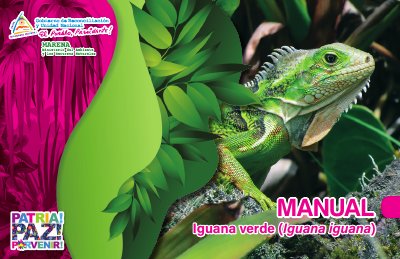
This 12-page Spanish manual was published by Nicaragua's Ministerio del Ambiente y los Recursos Naturales (MARENA) as part of the national strategy "Biodiversidad, tu solución basada en la naturaleza". It presents, in simple terms, the basic principles for keeping and breeding the green iguana (Iguana iguana) in captivity.
The document covers the taxonomy and physical description of the species, sexual dimorphism, diet (including a table of plants eaten in captivity), habitat, ecological importance, enclosure construction and animal density, cleaning routines, reproduction and egg laying, preventive health measures, and a closing list of reproductive parameters of the species. This manual is written in Spanish.
| Minimum capture size | 1.20 m (females) and 1.40 m (males) |
|---|---|
| Male-to-female breeding ratio | 1:3 |
| Fertility | 70 % |
| Hatching rate | 70 % |
| Neonate mortality | 15 % |
| Juvenile mortality | 10 % |
| Incubation time | approximately 73 days |
| Clutch size | 10 to 80 eggs per female, average 30 |
One male for every three females, a ratio of 1:3.
About 73 days.
Between 10 and 80 eggs per female, with an average of 30.
At least twice a week, changing the water and washing the space, with feeders cleaned daily.