
This manual introduces the knowledge of sheep breeds, reproduction and health. The main contents include: the selection of breeding sheep, breeding, management, vaccination, etc., and it is a reference book for sheep farmers and relevant departments.
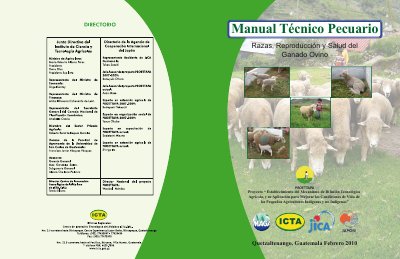
Published in Quetzaltenango, Guatemala, in February 2010, this Spanish-language technical manual was prepared by José Arnulfo Vásquez Rivas for ICTA, with financial support from JICA and within the PROETTAPA project. It addresses sheep production in Guatemala.
The manual covers sheep breeds, reproduction and breed improvement, estrus, management of pregnant females, normal and abnormal lambing, care of newborn lambs, animal health, common diseases, and the use of medications. This manual is written in Spanish.
The manual states that there are 450 recognized sheep breeds worldwide.
The manual reports 27 kg for ewes and 35 kg for rams.
The Dorset breed can enter estrus during any season, allowing an accelerated production system with lambings every eight months.
It is used to disinfect the navels of newborns and to harden the hooves.