
Instructions on how to use the stone sealer, including the tools used and the construction process
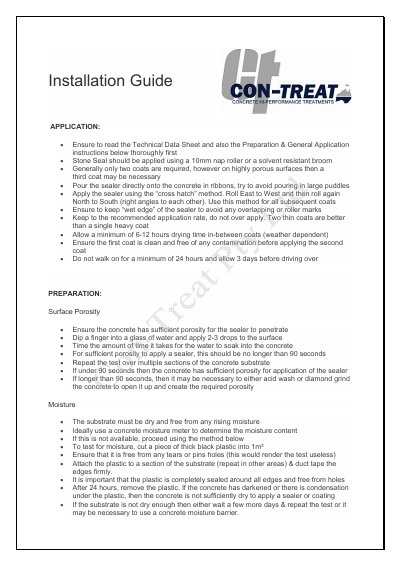
This guide covers the preparation and application of Con-Treat Stone Seal on concrete surfaces. It explains how to test surface porosity and moisture, remove contamination, and carry out acid etching where required before sealing.
The application section describes the tools and techniques for applying the sealer, the recommended drying times between coats, and the ambient conditions under which the product should be used.
| Application tool | 10mm nap roller or solvent resistant broom |
|---|---|
| Number of coats | Generally two, a third may be needed on highly porous surfaces |
| Drying time between coats | Minimum 6-12 hours, weather dependent |
| Minimum concrete age | 28 days |
| Application temperature | Not below 15°C or above 28°C |
Apply 2-3 drops of water to the surface and time how long it takes to soak in; it should be no longer than 90 seconds. If it takes longer, the concrete may need acid washing or diamond grinding.
Allow a minimum of 6-12 hours drying time between coats, depending on weather conditions.
No. The substrate must be dry and free from any rising moisture; use a moisture meter or the plastic sheet test to check.
Do not apply when the ambient temperature is below 15°C or above 28°C, and avoid direct sunlight above 28°C.