
This document is the user manual of Capital Safety anchor device.
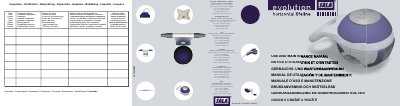
This is the use and maintenance manual for a Capital Safety anchor device, published by Capital Safety Group with contact addresses for its EMEA, Northern Europe, USA, Canada, Australia and Asia offices. The manual opens with a table matching the equipment to European, North American, Canadian and Australian standards for anchorages, connectors, fall arrest systems, work positioning and restraint systems, descender devices, elevation rescue systems and harness anchorage marking.
The English text sets out important recommendations for the PPE system: training and competence of users, visual inspection before each use, removal from service after a fall, health requirements, clearance under the working zone, rescue planning, the permitted ambient temperature range and choice of anchorage point. It also gives specific guidance on sharp edges, swing falls, rescue and actions after a fall, and ends with a multilingual inspection record page for recording date, competent person, reason for entry, defects, repairs and the next due date.
| Operating ambient temperature | –40 °C to +60 °C |
|---|---|
| Anchorage strength (EN 795) | >1000 daN |
| Anchorage strength (North American standards) | >22 kN (5000 lbs) |
| Free fall limit, Australian conformity | maximum 2 m |
| Free fall limit, North American conformity | maximum 1.8 m (6 feet) |
It must be used at an ambient temperature between –40 °C and +60 °C.
Further use of the system should be restricted until a Capital Safety Group technician or factory authorized representative has performed a full site inspection.
Whenever possible, choose an anchorage point located above the position of the user and avoid any point whose strength may be in doubt.
It must only be used by competent persons who have been given appropriate training or who work under the immediate responsibility of a proficient supervisor.