
This document is a guide for the safe handling of WEST SYSTEM® brand epoxies, and some related shop hazards. More importantly, it offers common sense safety practices that will help prevent health problems and assure your long and productive use of epoxy.
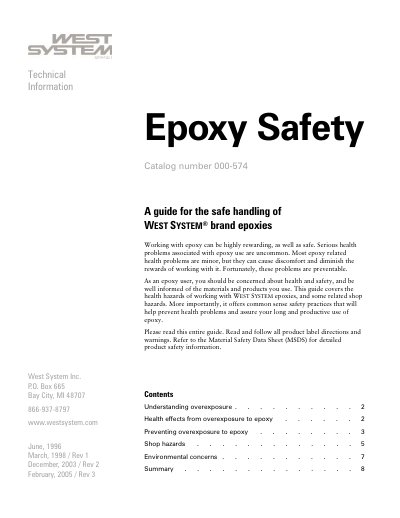
This guide from West System Inc. covers the safe handling of WESTSYSTEM brand epoxies. It explains how overexposure happens, describing how hazardous substances enter the body by skin absorption, inhalation or ingestion, and why liquid resin and hardener carry the greatest risk. It also addresses partially cured epoxy sanding dust, which can contain unreacted hazardous components until the epoxy cures completely.
The guide then describes the most common health effects of overexposure, including contact dermatitis, allergic dermatitis (sensitization), chemical burns from hardeners and respiratory irritation. It closes with steps for preventing overexposure: choosing the least hazardous product, setting up a safe shop with ventilation and dedicated storage, and wearing protective equipment such as gloves, eye protection, protective clothing and a respirator with an organic vapor cartridge. Contents also list shop hazards and environmental concerns.
| Time until epoxy is firm enough to sand | within two hours |
|---|---|
| Time until epoxy may cure completely | up to two weeks |
| Recommended minimum protective equipment | gloves, eye protection and protective clothing |
Skin contact is the most common means of exposure to resins and hardeners. Even minor skin contact, if repeated often enough, can cause chronic health problems.
Epoxy may be firm enough to sand within two hours but may not cure completely for up to two weeks, and until then the dust can contain unreacted hazardous components.
The recommended minimum for most epoxy users is gloves, eye protection and protective clothing.
Use a respirator with an organic vapor cartridge to protect yourself from epoxy vapors.