
This document describes how to properly locate, construct, maintain, and test a well to provide a reliable and safe drinking water source for many domestic, agricultural, and commercial purposes.
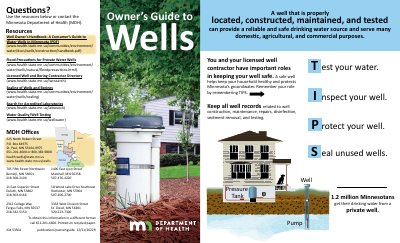
This guide provides instructions for testing, inspecting, protecting, and sealing private water wells. It outlines responsibilities for well owners and licensed contractors, including required isolation distances from contamination sources. The document also includes contact information and resources for well testing and construction.
Key actions include regular water testing, keeping the well area clear of debris, marking the well to prevent damage, and sealing unused wells to prevent contamination and safety hazards.
You must get an unused well sealed by a licensed well contractor to prevent contamination and safety hazards.
It can provide a reliable and safe drinking water source and serve many domestic, agricultural, and commercial purposes.
Coliform bacteria, nitrate, and arsenic.
At least 1-foot above ground.