
A method of measuring the repeatability accuracy of a six-axis robot uses displacement sensors for measurement, which is more compact and convenient, has lower maintenance costs, and uses a dedicated test software designed for the test process, making it easier for workers to use and facilitate the popularization of factory production tests.
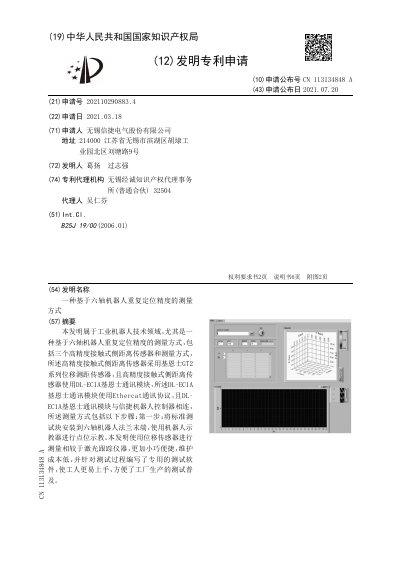
This document describes a method for measuring the repeatability accuracy of a six-axis robot. It uses three high-precision contact-type side-distance sensors (Kawasaki GT2 series) connected via DL-EC1A modules using Ethercat protocol to a XJ Robotics controller. The process involves installing a standard test block, teaching positions, running a program for 30 cycles, and using software to calculate accuracy based on national standards. The method is designed to be more compact and cost-effective than laser trackers. This manual is written in Chinese.
| Sensors | Kawasaki GT2 series displacement sensors |
|---|---|
| Controller | XJ Robotics controller |
Three high-precision contact-type side-distance sensors from Kawasaki GT2 series are used.
It uses three high-precision contact side distance sensors.
It is installed at the flange end of the six-axis robot.
It must be more than 50 centimeters away from the test point.