
This preparedness guide explains thunderstorms and related hazards and suggests life-saving actions YOU can take. With this information, YOU can recognize severe weather, develop a plan, and be ready to act when threat- ening weather approaches.
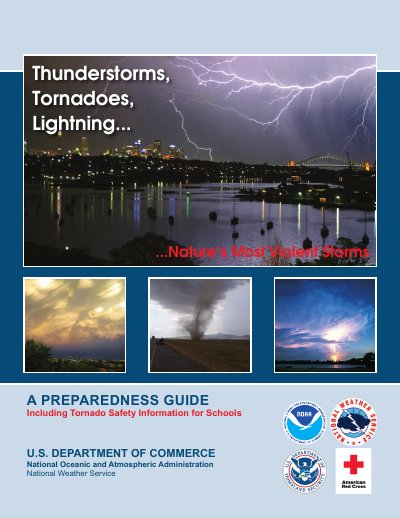
This National Weather Service preparedness guide explains thunderstorms and related hazards, including tornadoes, lightning, straight-line winds, flash floods, and hail, and suggests life-saving actions readers can take. It also includes tornado safety information for schools and emphasizes personal responsibility in emergency preparedness.
The guide presents tornado facts, describes how tornadoes form, explains the Enhanced Fujita Scale, and covers weather radar detection. It also addresses tornado fiction and fact, including shelter advice for vehicles and mobile homes.
The National Weather Service considers a thunderstorm severe if it produces hail at least one inch in diameter, winds of 58 mph or stronger, or a tornado.
An underground shelter, basement, or safe room are the safest places; if none are available, go to a windowless interior room or hallway.
No. The guide says the area under a highway overpass is very dangerous; people in a vehicle should immediately seek shelter in a sturdy building.
They should abandon the mobile home and seek shelter in a sturdy building immediately.