
The JTY-GD-SA1201N independent photoelectric smoke fire detector adopts a specially designed intelligent photoelectric sensor, SMT patch processing technology, has high sensitivity, strong anti-interference ability, stable performance, low power consumption, long product life, beautiful appearance, strong oil resistance, etc. Features, using NB network for low power wireless transmission, can remotely monitor the smoke concentration in the use environment. This product is suitable for home, shopping malls, office buildings, schools and other places
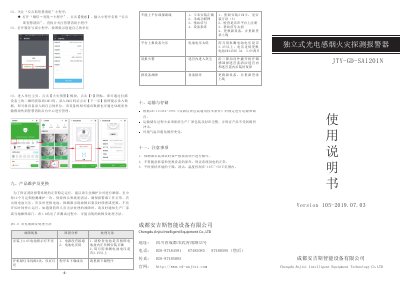
This is the Chinese user manual (使用说明书) for the Anjisi JTY-GD-SA1201N standalone photoelectric smoke fire detection alarm (独立式光电感烟火灾探测报警器), published by Chengdu Anjisi Intelligent Equipment Co., Ltd. The document describes how the detector works, its indicator lights and buzzer, installation on a ceiling base, insertion of the NB card and batteries, and how the device is registered to the "Anjisi Smart Fire" service account for remote monitoring over an NB-IoT network.
The manual also covers self-test, smoke alarm, silencing and battery-check functions, a troubleshooting table of common faults, maintenance and replacement advice, transport and storage, and precautions on where the detector should not be used. A specification list and a table of detector protection area and radius by room height and roof slope are included, along with figures for the product outline, base, NB card slot and battery compartment. This manual is written in Chinese.
| Model | JTY-GD-SA1201N |
|---|---|
| Sound pressure level | ≥80 dB at 3 m, A-weighted |
| Communication type | NB-IoT dedicated network |
| Battery | 2 × ER14505 AA 3.6 V, used in parallel |
| Current | Peak <200 mA; maximum continuous current <40 mA; standby current ≤20 µA |
| Battery life | 2 to 5 years, depending on number of batteries fitted and on-site detection and network conditions |
| Dimensions | 105 mm × 63 mm (diameter × height) |
| Standards | Detector: GB 20517-2006; transmission part: GB/T 26875.3-2011 |
| Operating environment | Temperature -10 °C to +50 °C; humidity ≤95 %RH, non-condensing |
Press and hold the self-test button; if the indicator flashes quickly and the alarm sounds, the detector is working normally. If not, check that the battery is correctly installed and that the sound and light parts are not damaged.
It is the low-battery indication: when battery voltage drops below 3.1 V the detector beeps roughly every 55 seconds, and this state lasts about 7 days before the batteries should be replaced.
The manual recommends professional maintenance at least once every 12 months, keeping the probe and base clean, and replacing batteries promptly when low.
Drill two mounting holes 58 mm apart in the ceiling and fix the base at points A and B with expansion plugs and self-tapping screws.
While the detector is in alarm, press the self-test button to silence it; if smoke keeps the detector in alarm, the alarm sound resumes after about 60 seconds.