
This document introduces the overview of weigh-in-motion (WIM) system, including the working principle of WIM system, application scenarios and how to select the right WIM system.
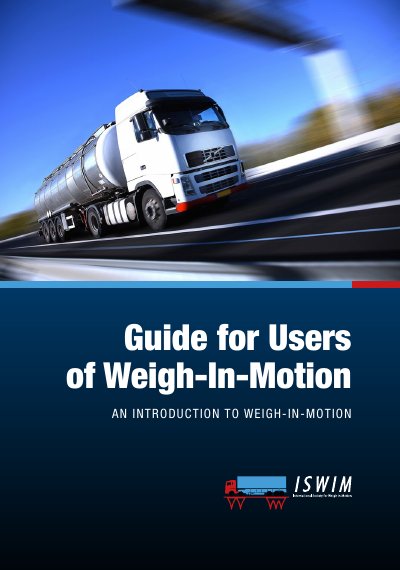
Published by ISWIM in May 2019 and written by Hans van Loo and Aleš Žnidarič, this guide introduces weigh-in-motion (WIM) technology for road and rail vehicles. It explains why vehicle weight information matters and describes WIM measurement conditions and data quality.
The document outlines different vehicle weighing types and WIM technologies, then covers WIM data uses such as traffic loading statistics, weight enforcement, tolling and industrial applications. It also describes a five-step process for selecting a WIM system and gives an overview of operation, inspection, sensor maintenance, calibration and data quality.
WIM is a technology used for private and public purposes related to the weights and axle loads of road and rail vehicles.
It measures the dynamic axle loads of vehicles and calculates the best possible estimate of the related static values.
ISWIM, the International Society for Weigh-in-Motion, published the guide.
The guide is Version 1.1, dated May 2019.