
This is a laboratory manual that introduces the procedures for laboratory tests such as malaria, filariasis, hemoglobin and hematocrit.
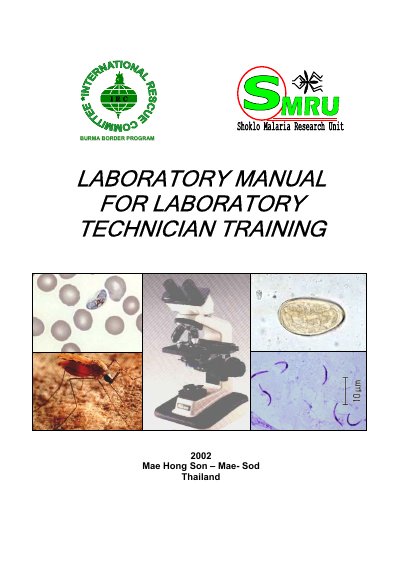
This manual serves as a training guide for laboratory technicians working in camps along the Thai-Myanmar border. It covers essential topics including health and disease concepts, job descriptions, laboratory safety, and the proper use of microscopes. The document provides detailed instructions on preparing and examining blood smears for malaria parasites, as well as techniques for diagnosing tuberculosis, filariasis, and hepatitis B.
The laboratory finds infectious agents that are too small to be seen by the naked eye, such as malaria parasites or tuberculosis bacteria.
The laboratory can check for substances like sugar in the blood or protein in urine.
A laboratory technician collects specimens, prepares smears, performs staining, examines samples, records results, and maintains equipment.