
This document is the instruction and maintenance manual for the HPNGV4 series compressed natural gas vehicle regulator by Enidine/Conoflow. The regulator is suitable for CNG fuel systems with pressures of 3000 and 3600 psi. It is a self-contained pressure reducing regulator. The document provides information on installation, connections, specifications, features, optional accessories, and safety precautions.
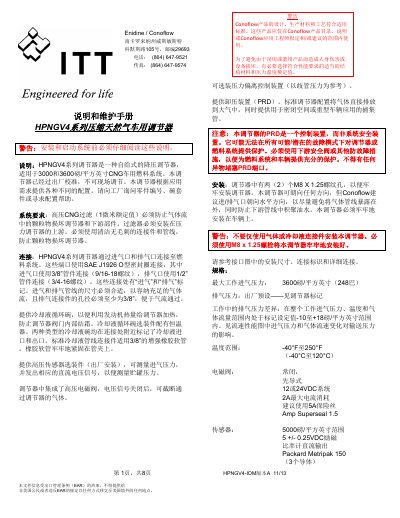
The document serves as an instruction and maintenance manual for the HPNGV4 series self-contained pressure reducing regulator designed for CNG fuel systems operating at 3000 and 3600 psi. It details system requirements, connection specifications including SAE J1926 O-ring seals, and installation procedures involving M8 x 1.25 mounting bolts.
| Max Working Inlet Pressure | 3600 psi (248 bar) |
|---|---|
| Temperature Range | -40°F to 250°F (-40°C to 120°C) |
| Mounting Thread | M8 x 1.25 |
| Inlet Connection Size | 3/8" pipe (9/16-18 thread) |
| Exhaust Connection Size | 1/2" pipe (3/4-16 thread) |
No, this regulator is calibrated at the factory and cannot be adjusted in the field.
A high-pressure CNG filter with a 1 micron rating must be installed upstream to prevent damage from particulates.
Use appropriate lubricants like oil or synthetic ester; silicone grease must not be used as it can damage oxygen sensors.