
This is an instruction manual for the KX-TG2224W model of Panasonic wireless telephone, which introduces the use of the telephone, safety use precautions and other
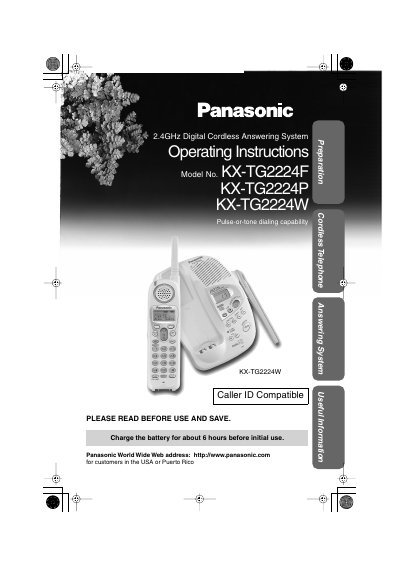
This document provides operating instructions for the Panasonic KX-TG2224 series of 2.4GHz Digital Cordless Answering Systems. The manual covers essential topics including initial battery charging, connecting the unit to a telephone line, and installing batteries in the handset.
The guide details how to program various functions such as date/time settings, display language, dialing modes, ringer volume, and greeting messages. It also explains features like Caller ID compatibility, the phone book, automatic answering operation, and remote control capabilities.
| Frequency Band | 2.4GHz |
|---|---|
| Battery Type | Nickel-Metal Hydride (Ni-MH) |
| Power Requirements | AC 120 V, 60 Hz |
You should charge the battery for about 6 hours before initial use.
The recommended location is away from electrical appliances and in a high, central location without obstructions like walls.
Noise may be heard from the receiver or speaker; you should move away from the microwave and closer to the base unit.