
Agilent Capillary Flow Technology backflush technology can improve GC analysis quality, save time and money. The technology can quickly complete the analysis, improve the laboratory production efficiency, reduce the column cleaning frequency and detector maintenance frequency, and reduce the cost.
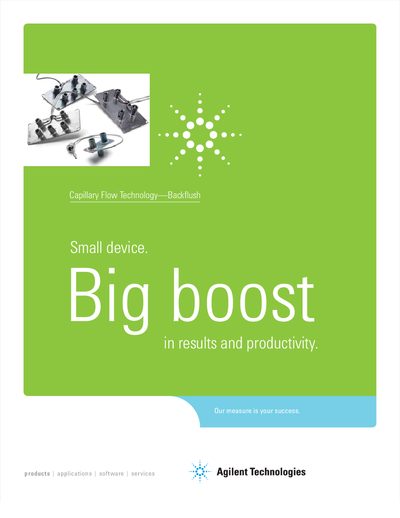
Agilent Capillary Flow Technology enables a backflushing technique that reverses column flow immediately after the last compound of interest has eluted. This process eliminates the need for long bake-out times and high temperatures required to remove highly retained sample components. By sweeping these materials backwards through the column and out the split vent, the technique prevents carryover, column fouling, retention time shifts, and MSD source contamination.
The original run time was reduced from 75 minutes to 40 minutes, resulting in a total time saved of 35 minutes.
The upper temperature was reduced from 320°C to 280°C.
The backflush should be performed for 7 minutes after the last component of interest has eluted.