
This document provides examples of layered and split setups, as well as the steps to create your own. By layering or splitting different voices on different sections of the keyboard, you can create a wide range of musical effects.
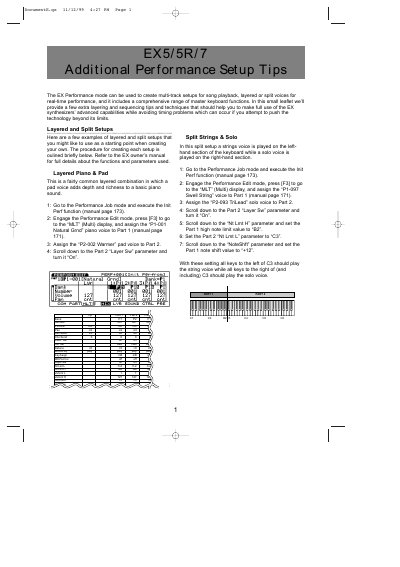
This leaflet offers additional setup tips and techniques for the Yamaha EX series synthesizers (EX5, EX5R, and EX7). It focuses on creating multi-track setups, layered or split voices, and real-time performance configurations while avoiding timing problems associated with pushing the technology to its limits.
The document covers specific examples of layered and split keyboard setups, such as combining piano with pads or strings with solo voices. It also details velocity switching methods and provides guidance on using the Arpeggiator within split voice contexts.
| Maximum simultaneous polyphony (EX5/5R AWM) | 126 notes |
|---|---|
| Maximum simultaneous polyphony (EX7 AWM) | 64 notes |
| FDSP Voices limit (EX5/5R) | 16-note polyphony |
| FDSP Voices limit (EX7) | 8-notes |
| Sequencer resolution | 480 clocks |
No, these instruments are not directly compatible with GM and XG files, so such files may not play as expected.
The extra processing power required can result in sluggish response when notes are played on the keyboard.