
This article introduces the features and functions of automotive digital diagnostic tools, specifically the automotive infrared thermometer. The infrared thermometer uses advanced infrared technology to quickly, accurately, and conveniently measure the surface temperature of objects. It can be used in automotive fault diagnosis to quickly identify changes and variations in surface temperature of automotive components, thereby pinpointing the location of the fault. Additionally, the infrared thermometer can be used to diagnose faults in the engine, cooling system, exhaust control system, air conditioning and heating system, tires, and brake drums.
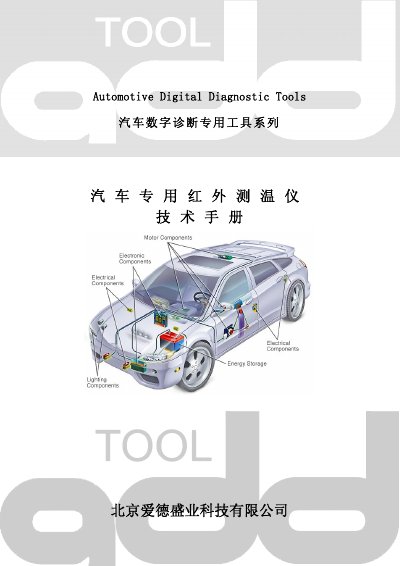
This manual explains the principles, benefits, and proper use of Addtool's automotive infrared thermometer for vehicle fault diagnosis. It describes how non‑contact temperature measurement can quickly locate overheating components such as cylinders, exhaust, cooling system parts, and HVAC elements.
Detailed sections cover measurement procedures, safety precautions, device specifications, and step‑by‑step diagnostic methods for engine, cooling, exhaust, and auxiliary systems. The guide also includes troubleshooting tips for common issues like abnormal cylinder temperatures and thermostat failures. This manual is written in Chinese.
| Measurement accuracy | within 1 °C |
|---|---|
| Resolution | 0.1 °C or 1 °C |
| Distance‑to‑target size ratio | 8:1 |
| Laser aiming | built‑in laser pointer |
The device provides temperature readings with an accuracy of within 1 °C.
Avoid pointing the laser at people or animals, do not measure reflective or polished metal surfaces, and keep the instrument away from hazardous areas.
Aim the instrument at the target, ensure the target is at least twice the size of the measurement spot, and maintain the recommended distance‑to‑spot ratio of 8:1.
No, the device cannot measure temperature through glass because glass affects the reading accuracy.