
This manual introduces the basic structure and performance of underground pipeline detectors and the basic operating methods of using underground pipeline detectors for metal pipeline detection.
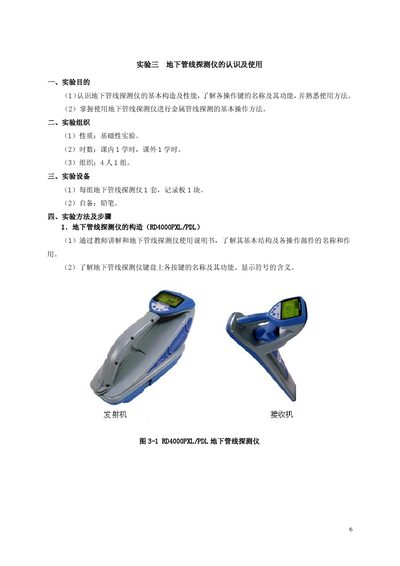
This manual introduces the RD4000PXL/PDL underground pipe detection instrument, explaining its purpose, basic structure, and the functions of its components. It guides users through proper setup, including connecting the ground probe and the pipe under test, and describes how to prepare the device before measurement.
The document details step‑by‑step measurement procedures, both blind‑method and indirect‑method, specifying frequency settings, power levels, and signal interpretation for depth estimation. Safety precautions, data reporting formats, and recommended power outputs for different pipe conditions are also provided. This manual is written in Chinese.
| Operating frequency | ≈32 kHz |
|---|---|
| Transmitter power output | 2.5 W – 5 W |
Connect the ground probe to the test pipe first, ensuring good contact before starting the measurement.
Both the transmitter and receiver should be set to the same frequency, typically around 32 kHz.
Use 2.5 W for pipes with good signal response and increase to 5 W for pipes with weaker signals.
Ensure the instrument is powered off and the probe is properly connected before measurement; otherwise a short circuit may occur.