
AT91RM9200-DVK2.3 development board is based on AT91RM9200 processor. The main features are CAN, infrared, RS485, USB host and slave, SD card, LCM, matrix keyboard, real-time clock, network, etc., and support ARM-LINUX kernel source code and U-BOOT boot program.
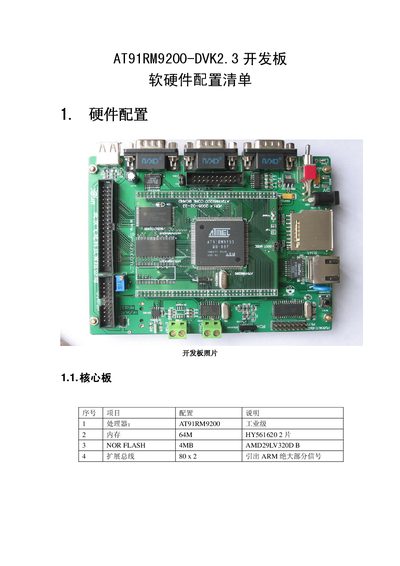
The AT91RM9200-DVK2.3 development board is an evaluation kit based on the AT91RM9200 industrial‑grade ARM9 processor. It offers a range of interfaces and optional peripherals for embedded system development.
The document describes the board's hardware configuration, available interfaces (USB host/device, CAN, RS232/RS485, Ethernet, SD card, LCD, keyboard, etc.), software environment (U‑Boot, Linux kernel, toolchains), and includes demo source code for communication, graphics, and peripheral drivers. This manual is written in Chinese.
| Processor | AT91RM9200 (industrial grade) |
|---|---|
| RAM | 64 Mbit HY561620 (2 chips) |
| NOR Flash | 4 MB AMD29LV320D |
| USB Host Port | 1 port, supports keyboard, etc. |
| USB Device Port | 1 port |
| CAN Interface | 1 × CAN2.0A (7‑pin) connector |
| RS485 Port | 1 port |
| RS232 Ports | 3 ports (1×9‑pin, 2×3‑pin) |
| SD Card Slot | 1 slot, supports <1 GB cards |
| LCD Interface | 1 × LCM240X128 monochrome LCD |
| Keyboard Matrix | 8×8 matrix, up to 64 keys |
| Real‑Time Clock | DS1302 with backup battery |
| Ethernet | 10/100 Mbit via DM9161 |
| NAND Flash | 64 Mbit K9F1208, YAFFS file system |
| Power Input | +5 V DC |
It uses the AT91RM9200 industrial‑grade ARM9 processor.
The board includes 64 Mbit of HY561620 RAM, implemented with two chips.
Optional items include a 240×128 monochrome LCD screen with driver code, CAN driver source, SD‑card driver source, and a matrix keyboard driver.