
Instruction manual, introducing the features and characteristics of the pipe cutter PIPECUT 360 PRO, including technical data, safety instructions, correct use and precautions, operating instructions, installation and replacement of blades, maintenance and service instructions, environment, warranty, etc.
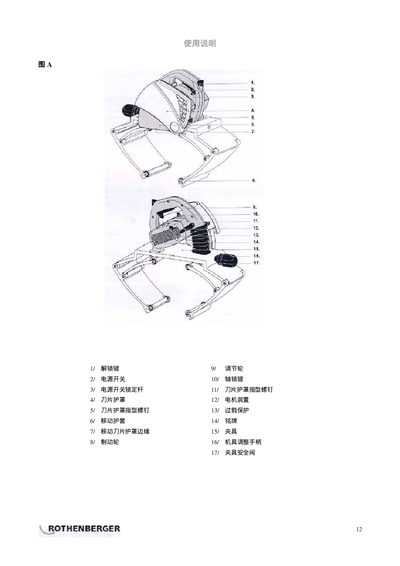
This manual covers the safe use of the PIPECUT 360 PRO pipe cutter, including required personal protective equipment, environmental restrictions, and basic operating procedures. It also details the technical data of the machine such as voltage, power, speed, and blade dimensions.
Installation, blade change, and routine maintenance are described with illustrated steps, along with troubleshooting tips, overload protection handling, and proper storage. Warranty and disposal information are provided at the end of the document. This manual is written in Chinese.
| Voltage | 230 V 50 Hz |
|---|---|
| Power | 1000 W |
| No‑load speed | 4000 rpm |
| Intermittent operation | S3 25 % |
| Blade diameter | 140 mm (155 mm max) |
| Blade mounting hole | 62 mm |
| Weight | 14.3 kg |
| Pipe size range | 75 mm – 360 mm |
| Maximum steel pipe wall thickness | 8 mm |
| Maximum plastic pipe wall thickness | 12 mm |
| Vibration level | 1.1 m/s² |
| Sound pressure level | 95.5 dB(A) |
Press the overload protection switch to restore power after the cause (e.g., dull blade or excessive speed) has been corrected.