
High-pressure Suspension Mill is mainly applied for the powder processing of mineral products in the industries of metallurgy, construction materials, chemical, and mining, etc. It can produce powder from various non-flammable and non-explosive mineral materials with Mohs hardness below 9.3 and humidity less than 6%, such as quartz, feldspar, calcite, talcum, barite, fluorite, cinder, cement clinker, activated carbon, dolomite, granite, soft coal, coking coal, lignite, magnesia, chromium oxide green, gold ore, red clay, clay, bolus alba, coke, coal Gangue, porcelain clay, kyanite, flour-spar, bentonite, medicinal stone liparite, diabase, pyrophyllite, shale red stone, emeraldite, basalt, gypsum, graphite, carborundum, heat insulating material, etc.
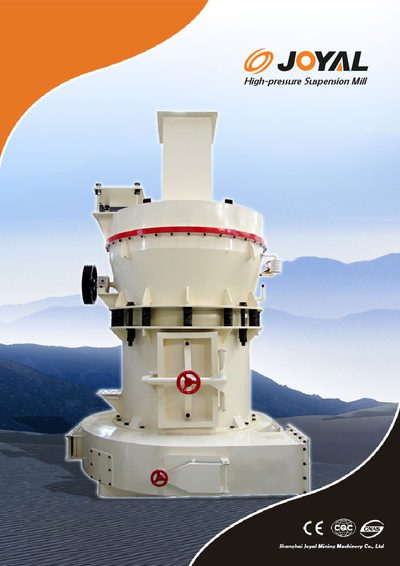
The high‑pressure suspension mill from JOYAL is designed for powder processing of mineral products in metallurgy, construction, chemical and mining industries. It can handle non‑flammable, non‑explosive materials with Mohs hardness below 9.3 and moisture under 6%, producing powders from 0.613 mm (30 mesh) down to 0.013 mm (1000 mesh).
The mill features a standing structure with integrated crushing, grinding, classification and collection units. Key components include a jaw crusher, vibration feeder, grinding rollers, a speed‑adjustable classifier, and a cyclone collector with a powder‑locking unit. The system is centrally controlled, allowing unmanned operation and easy maintenance.
| Maximum particle size | 0.613 mm (30 mesh) |
|---|---|
| Finest particle size | 0.033 mm (425 mesh) |
| Ultra‑fine particle size capability | 0.013 mm (1000 mesh) |
| Passing rate of finished particles | 98 % |
| Grinding pressure increase | 1500 kgf |
The mill can produce particles up to 0.613 mm (30 mesh) in size.
98 % of the particles meet the required fineness and pass the sieve.
The grinding pressure can be increased by 1500 kgf under high‑pressure springs.