
Key facts
- Manuals
- 2
- Languages
- EN · PT
- Last added
- 2023-11-16
Featured The Nature Conservancy manuals
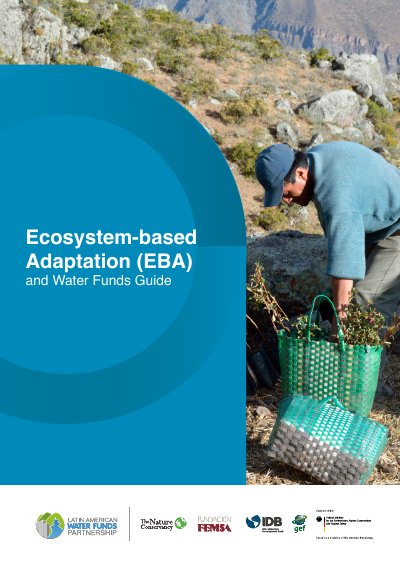
The Nature Conservancy Ecosystem-based Adaptation (EBA) and Water Funds Guide
This guide by The Nature Conservancy is intended for designers and executors of Water Funds in Latin America. It explains the Ecosystem-based Adaptation (EBA) approach and how to implement measures that reduce vulnerability to climate events by leveraging ecosystem services and biodiversity as part of water security actions.
It covers key concepts such as Nature-based Solutions, climate change adaptation, and EBA, and discusses including EBA in new or existing Water Funds, along with support tools and bibliography.
Covers: Why this Guide? · Key Concepts · What are NBSs? · What is Climate Change Adaptation? · What is EBA? · EBA Criteria
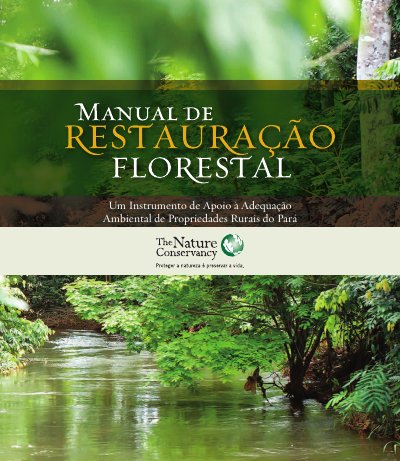
The Nature Conservancy Forest Restoration Manual: Environmental Adequacy of Rural Properties in Pará
This manual was published by The Nature Conservancy (TNC) together with NBL Engenharia Ambiental Ltda in Belém, Pará, in 2013, as a contribution to the "Paragominas Município Verde" project. It sets out the main procedures for forest restoration in the Amazon and is based mainly on activities carried out for the Rural Environmental Registry (CAR) and the agricultural and environmental adequacy of rural properties in Paragominas, Pará.
The document first lists the main legal aspects that guide forest conservation and restoration under Brazil's New Forest Code, with emphasis on specially protected areas such as permanent preservation areas (APP) and legal reserve (RL). It then describes the environmental situations identified in the municipality and the areas targeted for restoration, the restoration methods and a decision key for choosing among them, a list of regionally occurring species by ecological-functional behavior, and operational procedures ranging from site preparation to the monitoring and evaluation of restored forest. This manual is written in Portuguese.
Covers: Introduction · Legal framework · Land use and occupation in Paragominas · Environmental situations suitable for forest restoration in Paragominas · Forest restoration methods · Decision key for choosing the restoration method
Latest The Nature Conservancy manuals
The Nature Conservancy Ecosystem-based Adaptation (EBA) and Water Funds Guide
Other 44 pages · 16.8 MB · ENGuide for Water Fund designers and executors in Latin America on implementing Ecosystem-based Adaptation (EBA) measures for water security.
The Nature Conservancy Forest Restoration Manual: Environmental Adequacy of Rural Properties in Pará
Other 130 pages · 26 MB · PTManual from The Nature Conservancy on forest restoration methods and environmental adequacy of rural properties in Pará, Brazil.
Questions answered in The Nature Conservancy manuals
Why consider the EBA approach in a Water Fund?
Climate variability and climate change may affect water supply, and Water Funds seek water security that includes resilience.
From: The Nature Conservancy Ecosystem-based Adaptation (EBA) and Water Funds Guide
What are Nature-based Solutions (NBSs)?
They are an umbrella concept covering protection, restoration, and sustainable management of ecosystems that provide benefits to human well-being and biodiversity.
From: The Nature Conservancy Ecosystem-based Adaptation (EBA) and Water Funds Guide
What is the manual based on?
It is based mainly on activities developed for the Rural Environmental Registry (CAR) and for the agricultural and environmental adequacy of rural properties in Paragominas, Pará.
From: The Nature Conservancy Forest Restoration Manual: Environmental Adequacy of Rural Properties in Pará
Who published the manual?
It was published by The Nature Conservancy (TNC) with NBL Engenharia Ambiental Ltda in Belém, Pará, in 2013.
From: The Nature Conservancy Forest Restoration Manual: Environmental Adequacy of Rural Properties in Pará