
Key facts
- Manuals
- 1
- Languages
- EN
- Last added
- 2023-11-03
Featured Donegal County Council manuals
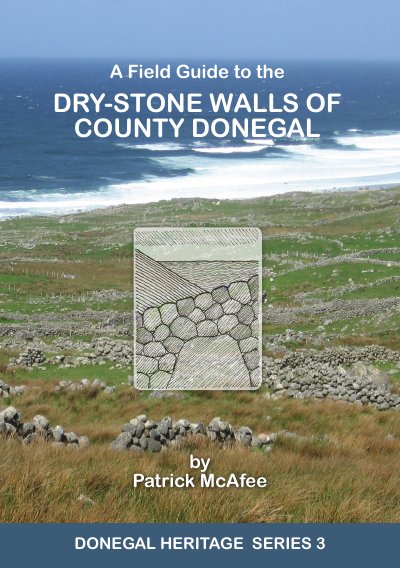
Donegal County Council Heritage Series 3 A Field Guide to the Dry-Stone Walls of County Donegal
A Field Guide to the Dry-Stone Walls of County Donegal is a booklet in the Donegal Heritage Series 3. It was written and illustrated by Patrick McAfee, printed by the County Donegal Heritage Office, Donegal County Council, and published by www.irishstonewalls.com. The copyright page states it was originally published as Dry-Stone Wall Survey: A Field Guide in 2008, revised in 2009, and dated 2015.
The guide is intended to assist in identifying dry-stone walls in County Donegal. It covers single wall, double wall, feidin wall, retaining walls, consumption wall, wall profiles and faces, piers and posts, and ditches. It states that dry-stone walls were built to enclose fields, clear land, mark boundaries, prevent soil erosion and control stock, and that building dry-stone walls in Ireland begins with the first farmers, the Neolithic people, over 5,000 years ago; most walls seen today originate from land enclosure in the eighteenth and nineteenth centuries.
Covers: Introduction · Single Wall · Double Wall · Feidin Wall · Retaining Walls · Consumption Wall
Latest Donegal County Council manuals
Donegal County Council Heritage Series 3 A Field Guide to the Dry-Stone Walls of County Donegal
Other 28 pages · 9.2 MB · ENA field guide from Donegal County Council describing the types, structure and history of dry-stone walls in County Donegal, Ireland.
Questions answered in Donegal County Council manuals
What is this booklet for?
It is a field guide to assist in the identification of dry-stone walls in County Donegal.
From: Donegal County Council Heritage Series 3 A Field Guide to the Dry-Stone Walls of County Donegal
When did most of the dry-stone walls we see today originate?
Most originate when land was enclosed on a mass scale in the eighteenth and nineteenth centuries.
From: Donegal County Council Heritage Series 3 A Field Guide to the Dry-Stone Walls of County Donegal