
Key facts
- Manuals
- 1
- Languages
- ES
- Last added
- 2023-11-03
Featured EECO manuals
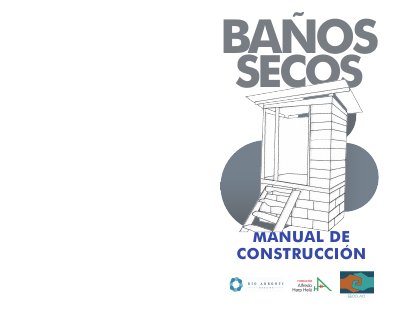
EECO Ecological Dry Toilet Construction Manual
This EECO (Espacio de Encuentro de las Culturas Originarias, A.C.) manual is the second edition, 2022, of a construction guide for an ecological dry toilet, published in the organisation's Ecotechnology Manuals series. It explains that the toilet works without water and separates feces from urine and gray water so the waste decomposes aerobically inside an isolated chamber.
The guide lists the cement, sand, gravel, welded wire mesh, PVC pipe, hose, blocks and fittings needed, together with the hand tools, and then follows the work step by step: cleaning, layout, leveling and compaction of a 1.90 m by 1.50 m area, the foundation slab, the walls of the two chambers with their gas vent pipe, interior plastering, and casting the concrete slab and the two chamber covers. Most steps are shown in figures. This manual is written in Spanish.
Covers: Characteristics of the dry toilet · Materials and tools · Cleaning, layout, leveling and compaction · Preparing the welded wire mesh · Foundation slab · Layout of the chamber walls
Latest EECO manuals
EECO Ecological Dry Toilet Construction Manual
Installation Guide 10 pages · 62.4 MB · ESEECO construction manual for an ecological dry toilet: materials and tools, foundation slab, chamber walls, plastering and covers.
Which document do I need?
Installation Guide
Mounting, wiring and first power-up. Read it before the hardware goes in.
Questions answered in EECO manuals
Does the ecological dry toilet need water to work?
No. The manual states that it is characterized by not needing water for its operation, which is important where water is very scarce.
Where should the dry toilet be built?
As close to the house as possible, with the entrance oriented from north to south so the vent pipe receives the most sunlight, and away from ravines, streams, standing water and animal pens.