
Key facts
- Manuals
- 2
- Languages
- EN
- Last added
- 2023-10-31
Featured Teagasc manuals
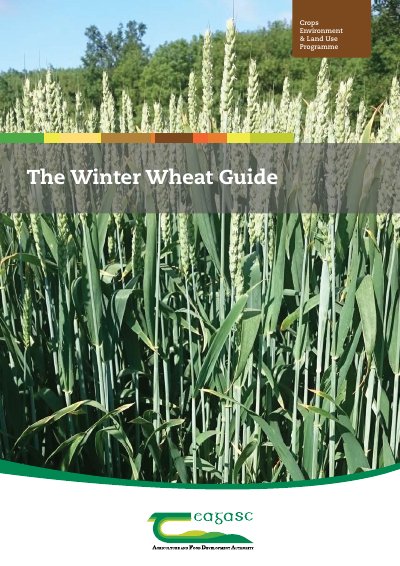
Teagasc Winter Wheat Guide
This guide describes the growth and development of winter wheat crops monitored across Ireland between 2013 and 2015, with average figures that can be used as a reference for comparing crop progress.
It also summarizes crop management information for Irish growers, including establishment, nutrient management, weed, pest and disease control, and grain quality.
Covers: Crop Growth and Development · Leaf Emergence and Tillering · Canopy Formation and Radiation Interception · Nitrogen Uptake · Ear Formation and Grain Filling · Crop Management
Teagasc A Guide to Vegetable Growing 9th Edition
This 9th edition guide from Teagasc provides practical advice on vegetable growing, from selecting the right site and understanding soil types to managing pests and diseases. It covers essential topics such as plant nutrition, garden compost, crop rotation, and irrigation.
Covers: Introduction · What is a Vegetable · Soils · Plant Nutrition · Garden Compost · Rotation
Latest Teagasc manuals
Teagasc Winter Wheat Guide
Other 40 pages · 2.7 MB · ENTeagasc guide to winter wheat growth, development and crop management for Irish growers, based on monitored crops from 2013 to 2015.
Teagasc A Guide to Vegetable Growing 9th Edition
User Manual 209 pages · 5.3 MB · ENA comprehensive guide covering soil management, plant nutrition, composting, rotation, weed control, pest and disease management, and specific growing…
Which document do I need?
User Manual
Day-to-day operation, settings and troubleshooting. Start here if the product is already set up.
Questions answered in Teagasc manuals
What determines winter wheat yield?
Grain number per square metre and grain size had an equal influence on yield, while ear number had the biggest influence on grain number.
What is the average phyllochron?
The average phyllochron is 110°C days, with a range of 89-131°C days.
What does Chambers Dictionary define as a vegetable?
A vegetable is a plant or any of its parts, other than fruits and seeds, that is used for food, such as roots, tubers, stems and leaves.
Which vegetables are usually direct drilled?
Carrots, parsnips, scallions, beetroot, swedes, spinach, radish, peas and beans are usually direct drilled.