
Key facts
- Manuals
- 3
- Languages
- EN
- Last added
- 2023-10-20
Featured World Health Organization manuals
World Health Organization Laboratory Biosafety Manual Fourth Edition
The Laboratory Biosafety Manual Fourth Edition, published by the World Health Organization (WHO), serves as a comprehensive guide for the safe handling of pathogenic biological agents in laboratories. It emphasizes a risk-based approach, moving away from rigid classifications to allow for economically feasible and sustainable policies tailored to individual circumstances.
Covers: Introduction · Risk assessment · Core requirements · Heightened control measures · Maximum containment measures · Transfer and transportation
World Health Organization Helmets: a road safety manual for decision-makers and practitioners, second edition
This manual, published by the World Health Organization, provides guidance for decision-makers and practitioners on implementing helmet use interventions to reduce road traffic injuries. It includes evidence-based strategies, implementation challenges, and evaluation methods. The second edition updates the content with new evidence and case studies to support global road safety efforts.
The manual is part of a series developed by WHO, the Global Road Safety Partnership, the FIA Foundation, and the World Bank to promote cost-effective, culturally appropriate road safety measures, particularly for low- and middle-income countries.
Covers: Preface · Advisory Committee · Acknowledgements · Abbreviations · Executive Summary · Why were these manuals developed?
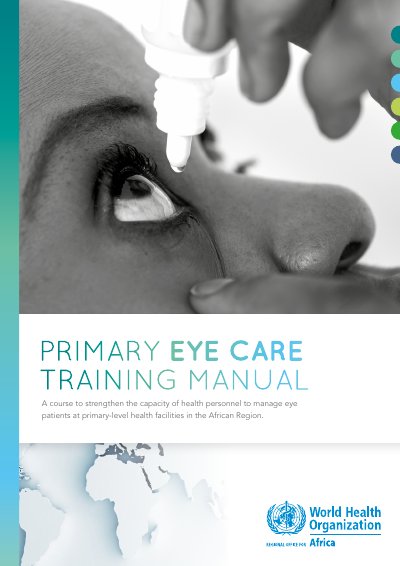
World Health Organization PRIMARY EYE CARE TRAINING MANUAL
This manual provides step-by-step guidance for designing and delivering eye care training courses for health personnel in African primary health facilities. It covers course structure, clinical algorithms, skill protocols, and checklists. The content is evidence-based and tailored for non-specialist staff. It is intended for course directors, facilitators, and anyone commissioning or supporting such training programs.
The manual includes practical sessions on vision screening, eye drop administration, referral procedures, and patient counseling, along with appendices for record cards, messages, and consumable lists. It is licensed under a Creative Commons Attribution-NonCommercial-ShareAlike 3.0 IGO license.
Covers: Introduction and purpose · Abbreviations · Acknowledgements · Course basics · Course outline · PEC lesson plans
Latest World Health Organization manuals
World Health Organization Laboratory Biosafety Manual Fourth Edition
Other 108 pages · 2.5 MB · ENThis document provides international guidance on laboratory biosafety and biosecurity, covering risk assessment, core requirements, containment measures…
World Health Organization Helmets: a road safety manual for decision-makers and practitioners, second edition
User Manual 52 pages · 1.9 MB · ENA road safety manual for decision-makers and practitioners on helmets, covering evidence-based interventions and implementation strategies.
World Health Organization PRIMARY EYE CARE TRAINING MANUAL
User Manual 103 pages · 4.8 MB · ENA guide for training health workers to manage eye patients at primary-level facilities in Africa.
Which document do I need?
User Manual
Day-to-day operation, settings and troubleshooting. Start here if the product is already set up.
Questions answered in World Health Organization manuals
What is the main focus of the fourth edition?
It builds on the risk assessment framework introduced in the third edition to enable countries to implement economically feasible and sustainable laboratory biosafety policies.
From: World Health Organization Laboratory Biosafety Manual Fourth Edition
Does the risk group of an agent directly correspond to the biosafety level of a laboratory?
No, the actual risk is influenced by the agent, the procedure being performed, and the competency of the laboratory personnel.
From: World Health Organization Laboratory Biosafety Manual Fourth Edition
What is the title of this manual?
Helmets: a road safety manual for decision-makers and practitioners, second edition.
Who published this manual?
The World Health Organization.
What is the purpose of this manual?
The manual provides guidance on designing, implementing, and evaluating a course to build the capacity of health personnel to manage eye patients at primary-level health facilities in the African Region.
From: World Health Organization PRIMARY EYE CARE TRAINING MANUAL
Who is the intended audience for this manual?
This manual is intended for use by course directors and facilitators, as well as persons who wish to commission, support, or offer a course serving the stated aims.
From: World Health Organization PRIMARY EYE CARE TRAINING MANUAL