A historical overview of multichip modules, covering their development phases, applications, and industry infrastructure.
About this manual
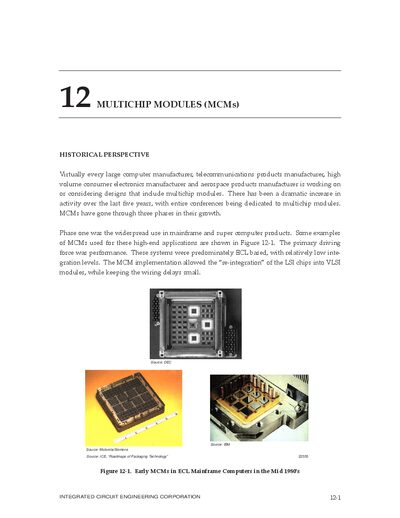
The document provides a historical perspective on multichip modules (MCMs), describing three growth phases: early mainframe and super‑computer use, later industry exploration and infrastructure building, and finally volume production for consumer and industrial products. It discusses the performance drivers, cost considerations, and market forecasts that shaped MCM adoption.
It also defines what constitutes an MCM and outlines the main families of MCM technologies—Hybrids, Chip on Board (COB), and Few Chip Packages (MCPs)—illustrating each with examples from major manufacturers and showing how they fit into modern electronic systems.
What's inside
- Historical Perspective
- Phase One: Mainframe Applications
- Phase Two: Industry Development
- Phase Three: Volume Production
- Definition of MCM
- Types of MCMs
- Hybrid MCMs
- Chip on Board (COB)
- Few Chip Packages (MCPs)
- Market Forecast
Frequently asked questions
What is the generally accepted definition of a multichip module (MCM)?
An MCM is defined as a collection of more than one bare die on a common substrate.
What are the three phases of MCM growth described in the document?
Phase one was the widespread use in mainframe and super‑computer products; phase two involved exploration of MCM technologies and building an infant infrastructure; phase three established a strong merchant infrastructure and introduced volume‑production MCM designs.
What are the main types of multichip modules covered?
The document lists Hybrids, Chip on Board (COB), and Few Chip Packages (MCPs) as the primary families of MCMs.