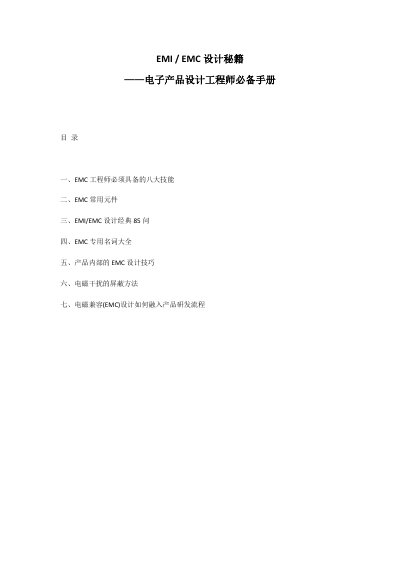
A Chinese handbook covering EMI/EMC design skills, common components, shielding methods, and how to integrate EMC into product development for electronic…
About this manual
This guide provides electronic product design engineers with a comprehensive overview of electromagnetic compatibility (EMC) and electromagnetic interference (EMI) design. It covers the eight essential skills an EMC engineer should possess, introduces frequently used components such as common‑mode inductors, ferrite beads, and filter capacitors, and explains their principles and selection criteria.
The document also discusses practical shielding techniques, system‑level integration of EMC considerations, and a step‑by‑step process for controlling EMC design throughout product development, from initial concept to certification. It includes a 85‑question Q&A section that addresses common design challenges and regulatory standards. This manual is written in Chinese.
What's inside
- EMC Engineer Required Skills
- Common EMC Components
- EMI/EMC Design Q&A (85 Questions)
- EMC Terminology Glossary
- Internal EMC Design Tips
- EMI Shielding Methods
- Integrating EMC Design into Product Development
- System Process Method for EMC
Frequently asked questions
Why should a product undergo EMC design?
To meet product functional requirements, reduce debugging time, comply with EMC standards, and prevent the product from causing electromagnetic interference to other equipment.
What component is commonly used to suppress common‑mode interference?
A common‑mode inductor, which consists of two identical windings on a single ferrite core and presents high impedance to common‑mode signals while allowing differential signals to pass.
Why are ferrite beads effective for high‑frequency filtering?
Ferrite beads exhibit high impedance at high frequencies, acting like a resistor‑inductor combination that converts high‑frequency interference into heat.